Scared Cat on Chair: Whimsical Arts for Creative Projects
A Scene of Humor and Handmade Charm
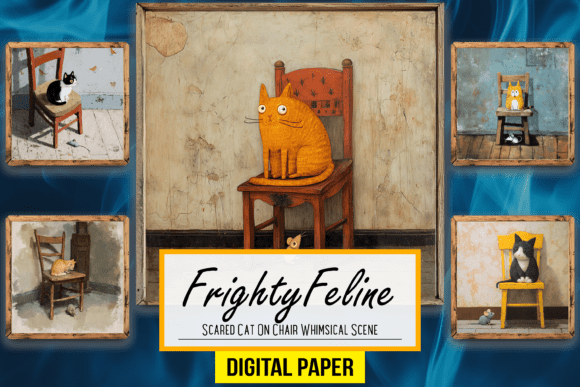
There’s a unique kind of magic in artwork that tells a tiny, funny story. The Scared Cat on Chair whimsical scene captures exactly that—a moment of playful panic where a nervous kitty perches high on a chair, wide-eyed and frozen, as a tiny, confident mouse scurries below. It’s a reversal of the classic cat-and-mouse tale, rendered with a soft, illustrative style that feels both naive and deeply intentional. The charm isn’t just in the subject, but in the execution: every pencil line, every gentle watercolor wash, every slightly uneven edge contributes to a handmade aesthetic that radiates warmth and personality.
This isn’t a sterile, vector-perfect graphic. It’s a piece with texture, with a story, with a sense of humor that doesn’t take itself too seriously. The composition draws your eye naturally from the trembling cat to the oblivious mouse, creating a subtle narrative that works silently in the background of any project. It’s the kind of detail that makes people pause, smile, and feel a connection. For designers and creators, that emotional resonance is pure gold. It transforms a simple background into a talking point, a brand touchstone, or a cherished part of a personal keepsake.
Where This Whimsical Artwork Truly Shines
The practical applications for a scene like this are surprisingly broad, precisely because its personality is so specific. It’s not trying to be everything to everyone; instead, it excels in projects where a touch of whimsy, nostalgia, or lighthearted storytelling is the goal.
- Branding with Personality: If your brand voice is friendly, approachable, and maybe a little quirky, this scene can become a signature element. Imagine it as the backdrop for a small pet boutique’s packaging, the hero image on a cozy café’s menu, or the defining motif for a children’s book author’s website. It instantly communicates that a brand doesn’t take itself too seriously and values creativity.
- Editorial and Publishing Design: In magazine layouts, blog headers, or book chapter dividers, this artwork provides a refreshing visual break from standard stock photography. It works beautifully as a display element for columns about pet humor, lifestyle tips, or creative living. The handmade feel adds an artisanal quality that elevates the entire publication.
- Digital Content That Stops the Scroll: On social media, where visual noise is constant, a charming, story-driven image like the scared cat on its chair is inherently engaging. It’s perfect for Instagram post backgrounds, Pinterest pin templates, or Facebook cover photos for creatives, writers, or animal-centric accounts. The scene’s subtle humor encourages shares and comments, boosting organic reach.
- Physical Products and Crafts: This is where the artwork truly comes to life. As a background for custom greeting cards, it sets a playful tone. Printed on scrapbook pages, it frames memories with personality. Used in poster designs or wall art for a child’s room or a home office, it becomes a piece of decor that sparks joy. The included high-resolution files ensure it prints crisply at any size.
The key is to use it where its strengths are amplified. It pairs wonderfully with other handwritten fonts or soft serif fonts that complement its organic style. Avoid pairing it with overly rigid, corporate sans serif typefaces unless the contrast is an intentional part of your design strategy.
Practical Guidance for Integrating This Art
Working with a detailed illustrative background requires a thoughtful approach to maintain clarity and impact. Here’s how to get the most out of it.
Evaluate the Fit: Before diving in, ask if the scene’s tone matches your project’s message. It’s ideal for themes of humor, innocence, friendship, or overcoming small fears. It might not be the right fit for a serious financial report or a luxury brand aiming for minimalist austerity. Its strength is its charm, not its formality.
Mastering Hierarchy and Readability: The biggest practical challenge with any busy background is ensuring your foreground text remains legible. This is where modern typography skills come in. Use the artwork on larger areas where text will be overlaid in a contained box or banner. Alternatively, place it in areas with less critical information, like the header or footer of a page, and keep main body text on a clean, solid color field. Always test your font pairing—a bold, simple display font will often stand out better than a delicate script font.
Building a Cohesive Brand Identity: If you’re using this for a brand, think of it as a core design asset rather than a one-off decoration. Pull colors from the scene—soft creams, muted blues, gentle pinks—to create a supporting color palette. This ensures consistency across your website, social media graphics, and packaging. The artwork then becomes a recognizable element of your brand identity, telling a consistent story.
Commercial Considerations: The included digital backgrounds are typically licensed for commercial use, which is a significant advantage for entrepreneurs and small business owners. You can confidently use them on products you sell, like on Etsy, without worrying about infringement. However, it’s always good practice to double-check the specific license terms upon download to understand any restrictions, such as on print-on-demand platforms.
Ultimately, the Scared Cat on Chair whimsical scene is more than just a pretty picture. It’s a tool for adding narrative, personality, and a human touch to your work. It invites your audience to lean in, to smile, and to engage with your content or products on a more personal level. In a digital world saturated with generic visuals, that kind of genuine connection is what sets memorable projects apart. Let this funny, fearful feline become the charming centerpiece that elevates your next creative endeavor. 🌟